
📚 High Frequency Plasma Learning Centre
📘 Lesson 5 of 24
Estimated Reading Time: 12 Minutes
Difficulty: 🟢 Foundation
What You’ll Learn
By the end of this lesson you’ll understand: ✔
Why spark gap electrodes are important. ✔
What different metals are used. ✔
Why I selected 100% zinc rods. ✔
How zinc rods wear over time. ✔
Why they are easy to maintain. ✔
How to clean them correctly. ✔
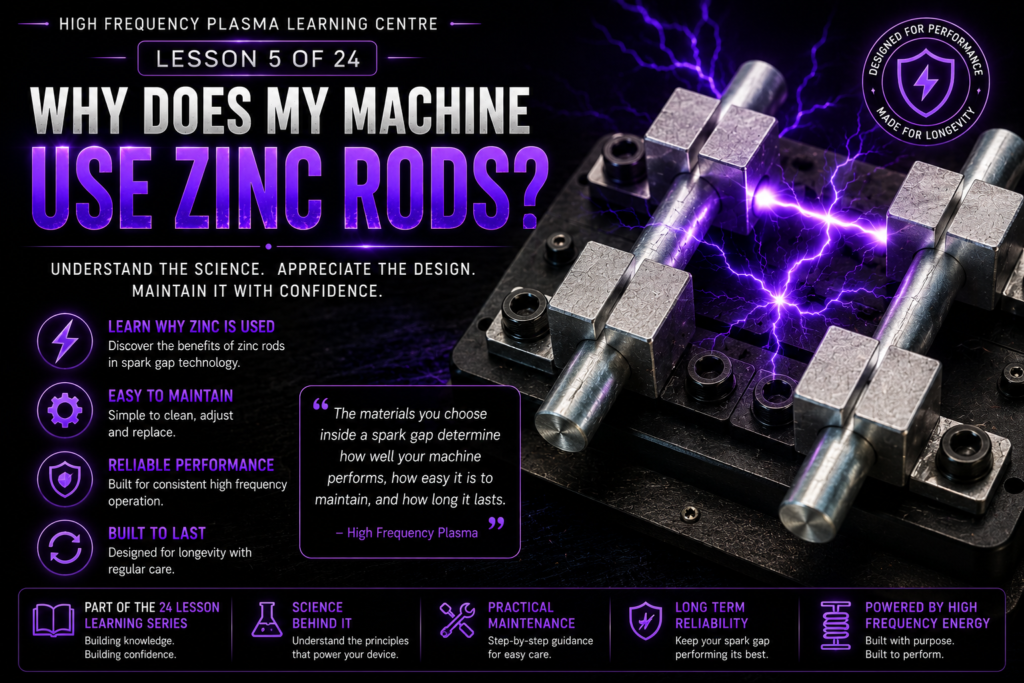
Why Does My Machine Use Zinc Rods?
One of the most common questions I receive from customers is:
“Why did you choose zinc rods for the spark gap?”
At first glance the answer may seem simple.
After all, a spark is a spark…
But the electrodes inside a spark gap perform an important job.
Every electrical discharge places enormous stress on the metal surfaces.
Thousands of electrical arcs occur during operation, meaning the choice of electrode material becomes an important design decision.
Rather than selecting a material based only on conductivity, I wanted a solution that was practical, easy to maintain and straightforward for owners to service.
That is why my High Frequency Plasma Generator uses 100% solid zinc rods.
What Does a Spark Gap Electrode Do?
Inside every spark gap are two electrodes separated by a small air gap.
As voltage builds, the electrical field between the rods increases.
Eventually the air can no longer resist the voltage.
A spark forms.
The spark lasts for only a fraction of a second before the process begins again.
This rapid switching action creates the high-frequency oscillations used within traditional Tesla-inspired plasma generators.
Because this process repeats many thousands of times, the electrode material must withstand repeated electrical discharge.

Why Electrode Material Matters
Different metals behave differently when exposed to repeated electrical arcs.
When designing a spark gap, builders often consider factors such as:
- Ease of maintenance
- Wear characteristics
- Stability
- Availability
- Cost
- Ease of replacement
There is no single material that is perfect for every application, which is why different builders make different choices.
Why I Chose Zinc Rods
After experimenting with different designs, I chose solid zinc rods for several practical reasons.
Easy to Replace
If the rods eventually become worn, they can simply be replaced without replacing the complete spark gap assembly.
Easy to Adjust
Because the rods slide within the mounting blocks, adjusting the spark gap is straightforward.
Easy to Maintain
Routine cleaning can usually be carried out in only a few minutes using a feeler gauge and a clean cloth.
Consistent Performance
When kept clean and correctly adjusted, the spark gap provides reliable operation throughout normal use.
Zinc Rods Naturally Wear
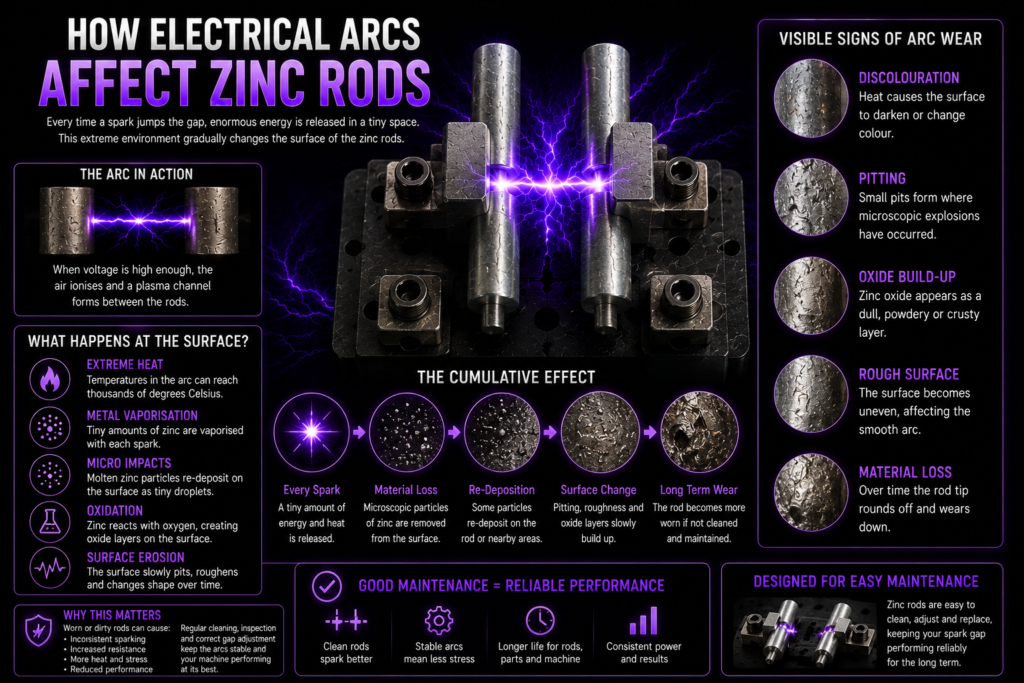
One important thing to understand is that all spark gap electrodes wear.
Every electrical arc removes an extremely small amount of material.
This is completely normal.
Over time you may notice:
- Small pits
- Slight discoloration
- Oxide deposits
- Minor surface roughness
These are all expected signs of normal operation.
Routine inspection helps keep the spark gap performing consistently.
Why Accessibility Was Important
When designing my machine I wanted owners to be able to maintain it themselves.
That is why the spark gap sits beneath a removable clear cover.
Instead of hiding everything inside a sealed enclosure, owners can:
- Inspect the spark gap
- Clean the rods
- Check the gap
- Replace electrodes when required
without specialist tools.
I believe this makes the generator more enjoyable to own and easier to look after over the long term.
How to Clean Zinc Rods
Keeping your zinc rods clean is one of the simplest ways to maintain reliable spark gap performance.
Each electrical discharge produces a tiny amount of heat and ionisation between the electrodes. Over time, small amounts of zinc oxide, dust and other debris can build up on the rod surfaces.
This is completely normal and is simply part of owning a spark-gap plasma generator.
Fortunately, cleaning the rods only takes a few minutes.
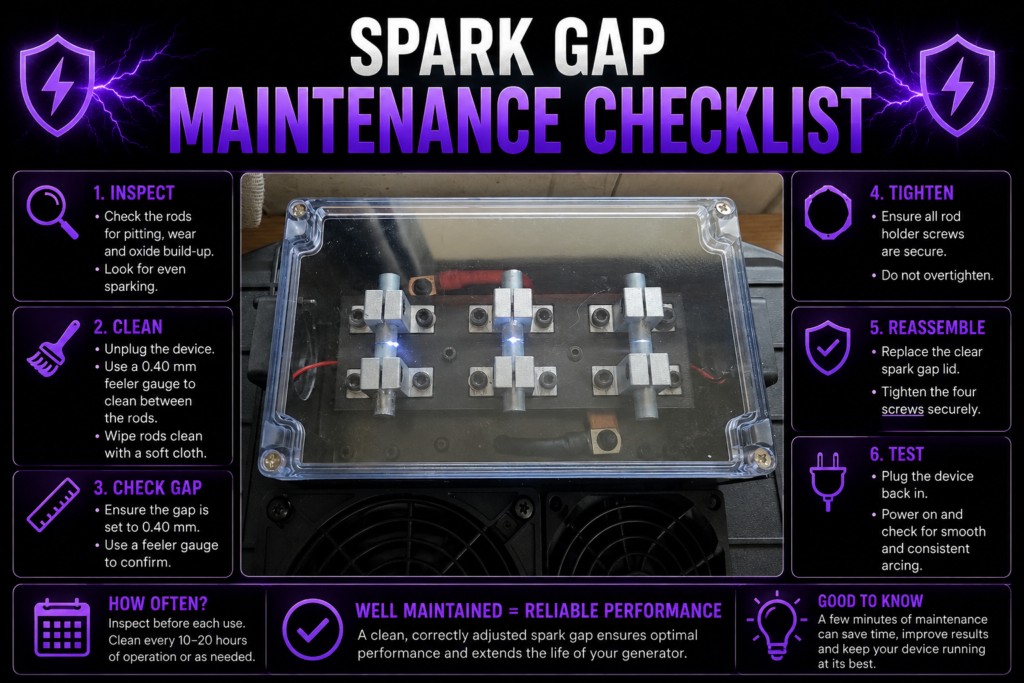
Cleaning Procedure
Step 1
Always unplug the plasma generator from the mains supply before carrying out any maintenance.
Step 2
Remove the four screws securing the clear spark gap cover and carefully lift off the lid.
Step 3
Insert a 0.40 mm feeler gauge between the zinc rods. Gently slide the gauge backwards and forwards through the gap to remove any loose deposits or debris while also confirming the correct gap spacing.
Step 4
Replace the clear cover and tighten the four screws securely.
Routine cleaning helps keep the spark gap operating consistently and reduces the build-up of oxide deposits over time.

How Often Should I Inspect the Zinc Rods?
Unlike many components inside electronic equipment, spark gap electrodes are designed to be inspected periodically.
The frequency of inspection depends on how often the plasma generator is used.
As a general guide:
- Before each use, carry out a quick visual inspection through the clear cover.
- Every 10–20 hours of operation, check the rod surfaces for any noticeable deposits.
- If required, clean the rods using the recommended 0.40 mm feeler gauge.
- Replace the rods if they become heavily worn or damaged after extended use.
Regular maintenance takes only a few minutes and can help keep your generator performing consistently.
How Do I Know If My Zinc Rods Need Attention?
Most spark gaps provide clear visual signs when maintenance is due.
Look for:
- White or grey oxide deposits.
- Small pits on the rod faces.
- A roughened surface.
- Rounded electrode ends after extended use.
- Uneven or inconsistent sparking.
These signs do not necessarily indicate a fault. They are simply part of the normal wear process that occurs whenever electrical arcs repeatedly form between the electrodes.
Why Easy Maintenance Was Important to Me
When designing my High Frequency Plasma Generator, I wanted owners to understand what was happening inside their machine.
Rather than hiding the spark gap inside a sealed enclosure, I chose to make it visible beneath a clear protective cover.
This allows owners to:
- Watch the spark gap operating.
- Inspect the condition of the zinc rods.
- Carry out routine maintenance.
- Adjust the spark gap if required.
- Replace worn rods without replacing the complete assembly.
I believe this approach makes the machine more enjoyable to own while also encouraging users to understand the engineering behind it.
Common Myths About Zinc Rods
Myth 1 – Zinc Rods Should Never Wear
This isn’t true.
Every spark gap electrode experiences wear over time.
Tiny amounts of material are removed with each electrical discharge, regardless of the electrode material used.
Myth 2 – Cleaning Is Difficult
Cleaning the spark gap is straightforward and usually takes only a few minutes using a feeler gauge and a clean cloth.
Myth 3 – Once Set, the Spark Gap Never Needs Checking
Like many mechanical components, spark gaps benefit from occasional inspection.
A quick visual check and routine cleaning help maintain consistent operation.
Frequently Asked Questions
Why Does My Machine Use Zinc Rods?
My plasma generator uses solid zinc rods because they are easy to inspect, adjust, clean and replace as part of normal maintenance.
Do Zinc Rods Wear Out?
Yes.
This is completely normal.
Every electrical discharge removes a microscopic amount of material from the electrode surfaces over time.
How Often Should I Clean Them?
Cleaning frequency depends on usage.
Regular inspection will quickly show when cleaning is needed.
Why Is a 0.40 mm Feeler Gauge Recommended?
The feeler gauge serves two purposes.
It helps remove loose deposits while also checking that the spark gap remains at the recommended spacing.
Can I Replace the Rods Myself?
Yes.
One of the advantages of the design is that the rods are intended to be accessible for inspection, maintenance and replacement.
Summary
Although they appear to be simple pieces of metal, zinc rods play an important role in the operation of a traditional spark-gap plasma generator.
Every electrical discharge depends on the condition and spacing of the electrodes.
By choosing adjustable solid zinc rods, I wanted to create a spark gap that owners could easily understand, maintain and service throughout the life of the machine.
Routine inspection, occasional cleaning and correct adjustment help keep the spark gap operating consistently while allowing users to appreciate the fascinating engineering taking place inside the generator.
🧠 Key Takeaways
Zinc rods form the electrodes of the spark gap. ✔
Every spark produces a tiny amount of normal electrode wear. ✔
Routine cleaning removes oxide deposits and debris ✔
A 0.40 mm feeler gauge helps maintain the correct gap. ✔
Adjustable zinc rods make maintenance simple. ✔
Regular inspection helps ensure reliable long-term operation. ✔
🔬 Zinc Rod Fact
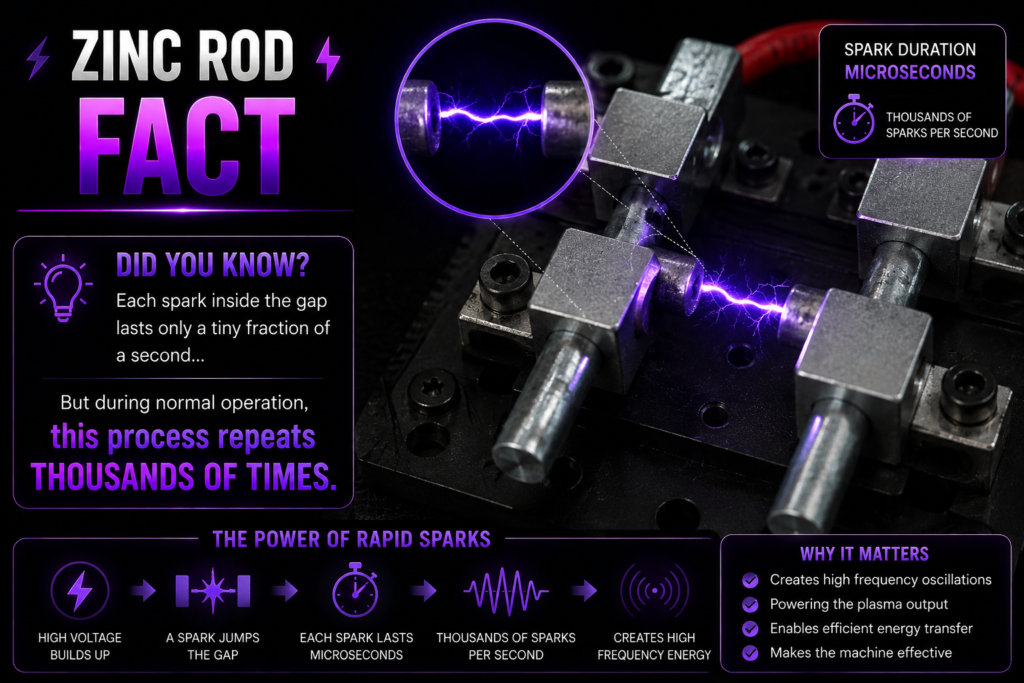
Did you know?
Each spark inside the gap lasts only a tiny fraction of a second, but during normal operation this process repeats thousands of times. Even though each discharge is extremely brief, the cumulative effect over many hours of use is why periodic inspection and maintenance are recommended.
Continue Your Learning Journey
⬅ Previous Lesson
What Is a Spark Gap?
Discover how spark gaps create rapid electrical discharges and why they have been an important part of high-frequency technology since the pioneering work of Nikola Tesla.
➡ Next Lesson
Why Are Plasma Bulbs Used?
Learn how sealed gas-filled bulbs transform high-frequency electrical energy into beautiful visible plasma and why they are such an important part of the plasma generator.
Related Lessons
You may also enjoy:
- What Is High Frequency Plasma?
- How Does a Plasma Generator Work?
- What Is Plasma?
- What Is a Spark Gap?
Disclaimer
The information contained within the High Frequency Plasma Learning Centre is provided for educational purposes to explain the science, history and engineering of plasma technology.
The High Frequency Plasma Generator is intended for educational, experimental, research, meditation, relaxation and personal wellness purposes only.
It is not a medical device and is not intended to diagnose, treat, cure, mitigate or prevent any disease or medical condition.
Always seek advice from a suitably qualified healthcare professional regarding medical concerns.
🎉 Lesson Complete
Congratulations!
You have now completed:
📘 Lesson 5 of 24
Why Does My Machine Use Zinc Rods?
You now understand why electrode material is an important design consideration, how zinc rods function inside a spark gap, how to maintain them, and why regular inspection helps keep your plasma generator operating reliably.