
Over the past few years, interest in how to construct a TZLA machine has grown dramatically. Hobbyists, electronics enthusiasts, and people fascinated by Nikola Tesla’s experiments are searching for reliable information about these unique high-frequency plasma devices.
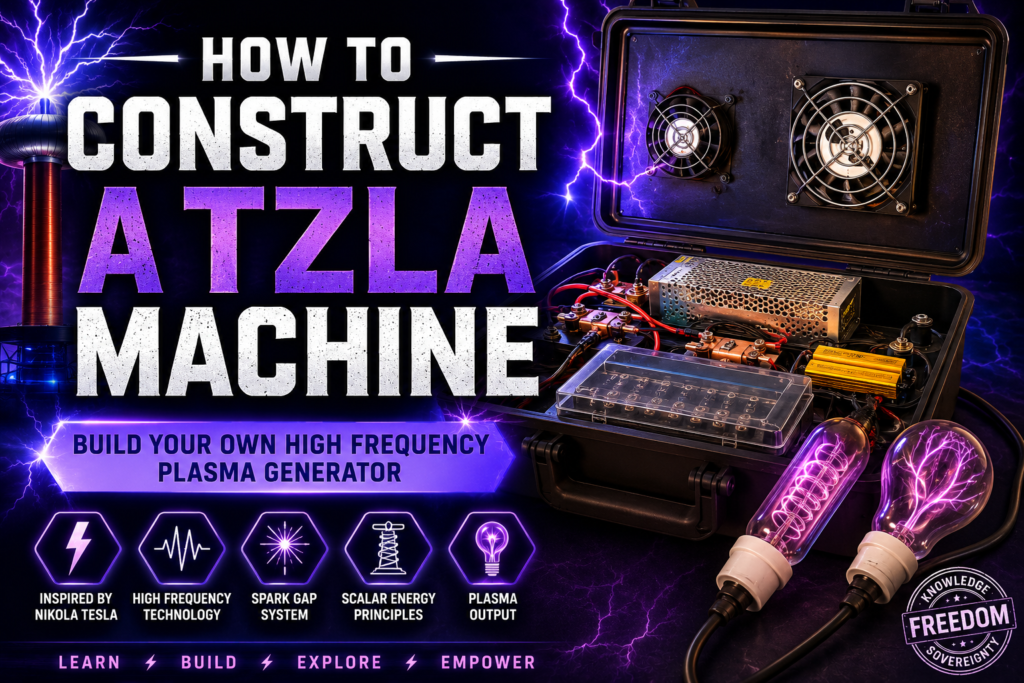
One reason is simple. Commercial versions can cost many thousands of pounds, leading technically minded individuals to explore whether they can build something similar themselves.
If you’ve found this guide by searching “How to Construct a TZLA Machine”, you’re in the right place.
Rather than simply presenting a list of electronic parts, this guide explains the principles behind these fascinating devices, the components commonly found in their design, the challenges involved, and the considerations before deciding whether to build one yourself.
You’ll also discover why many enthusiasts ultimately choose a professionally assembled unit instead.
What Is a TZLA Machine?
A TZLA-style machine is a high-frequency electrical device inspired by classic electrical research dating back more than one hundred years.
Although modern versions vary considerably, they generally share several common characteristics:
- High-frequency electrical generation
- High-voltage transformer technology
- Resonant electrical circuits
- Spark-gap switching
- Plasma discharge outputs
- Glass plasma electrodes or related accessories
These systems are often inspired by the pioneering work of inventors including:
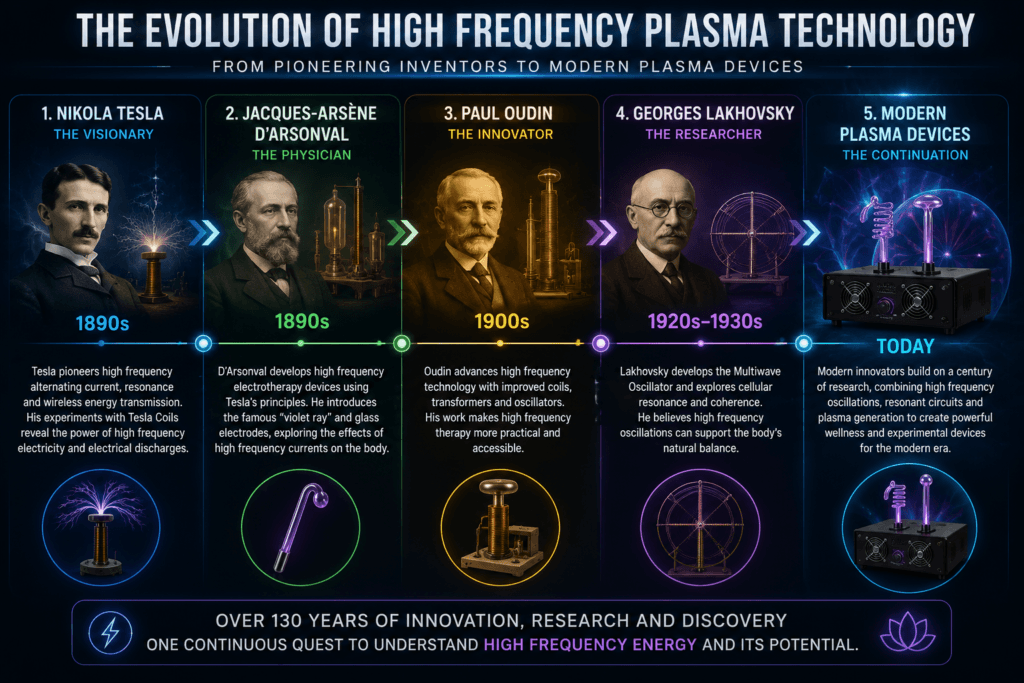
- Nikola Tesla
- Jacques-Arsène d’Arsonval
- Paul Oudin
- Georges Lakhovsky
Many contemporary builders also draw inspiration from more recent open-source experimental designs that explore these historical electrical concepts. The reference material you provided reflects one such approach, describing a system built around a high-voltage power stage, flyback transformer, spark gap and resonant output section.
Although individual designs differ, the overall objective is generally the same:
Generate high-frequency electrical energy that can be delivered to various output accessories such as plasma bulbs, coils or experimental resonant structures.
Why Are People Interested in Building One?
There are several reasons why interest continues to grow.
Some people enjoy learning about electrical engineering.
Others simply appreciate Tesla’s work and enjoy recreating historical technology.
Some builders enjoy:
- experimenting with resonance
- learning about spark gaps
- studying high-frequency electricity
- understanding transformer design
- building unusual electronic projects
For many, constructing a plasma generator is as much about the learning journey as the finished device.
The History Behind the Technology
Long before computers existed, inventors were already exploring electricity in remarkable ways.
Perhaps the most famous was Nikola Tesla.
During the late nineteenth century, Tesla demonstrated that electricity behaved very differently at high frequencies than the mains electricity powering homes.
His famous Tesla Coil became one of history’s most recognisable scientific inventions.
Around the same period, physicians and engineers including Jacques-Arsène d’Arsonval and Paul Oudin developed high-frequency electrical apparatus for scientific investigation and electrotherapy research.
Later, Georges Lakhovsky introduced ideas involving multiple resonant circuits and oscillating electrical fields.
Modern plasma generators borrow inspiration from many of these historical developments.
Rather than being direct copies of one specific invention, today’s devices often combine ideas from several historical sources into one system.
What Does a Typical High Frequency Plasma Generator Contain?
Although every builder chooses a different design, many TZLA-inspired machines contain several common functional sections.
Understanding these sections is far more valuable than simply memorising a wiring diagram.
1. Power Supply
Every electrical system begins with a power source.
Most modern plasma generators use a regulated DC power supply capable of delivering sufficient current for the oscillator stage. The example design in your reference document starts with a 12 V, 15 A switching power supply feeding the rest of the circuit.
A stable power supply is essential because every other section depends upon it.
2. High Frequency Oscillator
The next stage converts ordinary DC electricity into rapidly oscillating electrical energy.
Instead of simply increasing voltage, this stage creates fast electrical switching.
Without this oscillation, the remainder of the system would not function correctly.
Many experimental designs use resonant oscillator circuits to maximise efficiency while reducing wasted energy.
3. High Voltage Transformer
The oscillator then drives a high-voltage transformer.
This dramatically increases the voltage available to the remainder of the circuit.
Flyback transformers have become particularly popular because they were originally designed to generate very high voltages in CRT televisions.
Modern builders frequently adapt them for experimental high-frequency projects, and the reference document discusses different flyback sizes and their characteristics.
4. Capacitor Networks
One of the most misunderstood parts of a plasma generator is the capacitor bank.
Capacitors temporarily store electrical energy before releasing it extremely rapidly.
When combined correctly with inductors and other components, they form resonant circuits capable of producing high-frequency oscillations.
Different capacitor values can alter the electrical behaviour of the overall system, which is why experienced builders spend considerable time selecting suitable components. The reference document compares several capacitor configurations and notes that different values change the electrical characteristics of the circuit.
5. Spark Gap
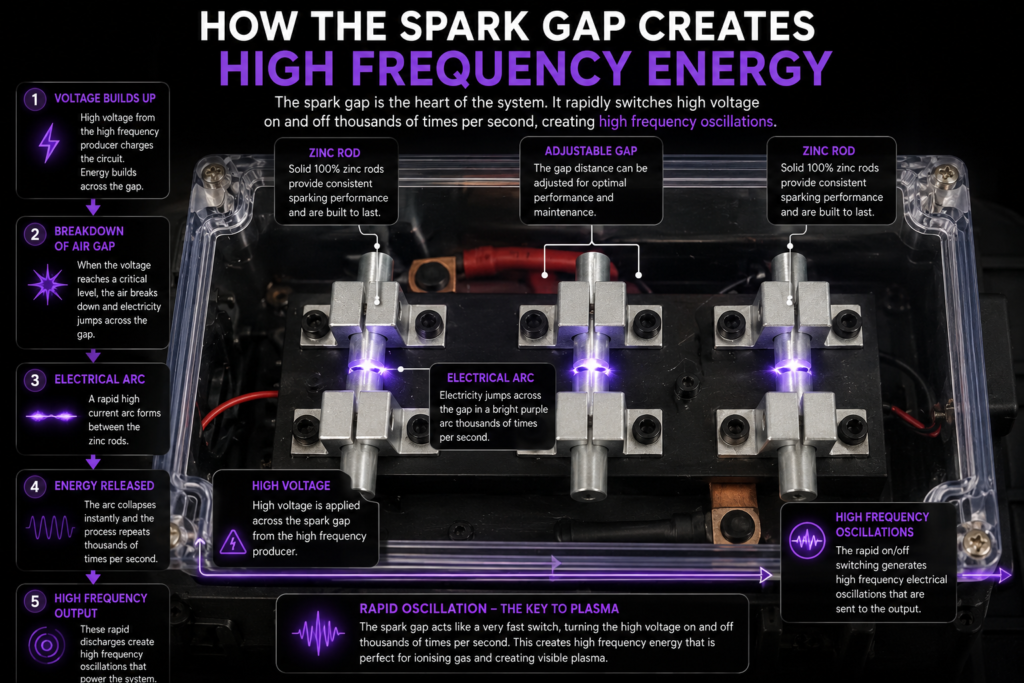
Perhaps the most iconic component is the spark gap.
This is where electrical energy builds until it jumps across a carefully adjusted air gap.
That brief discharge creates a burst of high-frequency oscillations.
Historically, spark gaps were used extensively in early wireless transmitters and Tesla’s own experiments.
Today they remain a fascinating demonstration of electrical resonance.
Different builders experiment with different electrode materials, adjustable gaps and cooling methods. The uploaded document, for example, discusses adjustable spark gaps and zinc electrodes as part of one experimental design.
6. Output Stage
Once high-frequency energy has been generated, it can be coupled into different output accessories.
Depending upon the design, this may include:
- Plasma bulbs
- Resonant coils
- Pancake coils
- Experimental towers
- Demonstration accessories
Each creates its own visual and electrical characteristics.
Why Isn’t There One “Correct” Design?
One question newcomers often ask is:
“Can someone show me the official TZLA schematic?”
The answer is—not really.
Unlike a commercially manufactured product built to one exact specification, the wider community has developed numerous variations over time.
Different builders use:
- different transformers
- different capacitor values
- different spark gaps
- different enclosure layouts
- different output accessories
- different cooling arrangements
As a result, no two homemade machines are necessarily identical.
Instead, each builder refines their own approach through testing, observation and practical experience.

The Biggest Challenges for DIY Builders
Although the concept sounds straightforward, building a high-frequency plasma generator is a significant undertaking.
Some of the most common challenges include:
Sourcing Components
Many specialised components are not available from local electronics shops.
Builders often need to source parts from multiple suppliers around the world.
Mechanical Construction
The enclosure must securely support components while providing adequate spacing, ventilation and cable routing.
Heat Management
High-frequency electronics generate heat.
Without suitable cooling, reliability may suffer.
Testing and Troubleshooting
Few DIY projects work perfectly on the first attempt.
Builders frequently spend many hours diagnosing issues and refining their designs.
Understanding Resonance
Perhaps the steepest learning curve is understanding resonance itself.
Small changes in component values can produce noticeable differences in electrical behaviour.
For many enthusiasts, mastering these concepts becomes one of the most rewarding aspects of the entire project.
Common Mistakes First-Time Builders Make
Almost every experienced electronics hobbyist will tell you the same thing—your first complex project rarely goes exactly to plan.
When researching how to construct a TZLA machine, it’s easy to underestimate the amount of planning and testing involved. Many first-time builders spend far more time troubleshooting than assembling.
Some of the most common challenges include:
Buying Low-Quality Components
Although cheaper components can seem attractive, poor-quality parts may reduce reliability and make troubleshooting much more difficult.
Quality transformers, capacitors, connectors, wiring and enclosures are often worth the extra investment.
Poor Cable Management
High-frequency circuits can become difficult to service if wiring is untidy.
Keeping cables organised not only improves appearance but also makes maintenance much easier.
Inadequate Cooling
High-voltage electronics naturally generate heat.
Many builders incorporate cooling fans and ventilation to help maintain consistent operating temperatures. The reference design, for example, includes cooling fans around key sections of the enclosure.
Rushing the Build
One of the biggest mistakes is trying to complete everything in a single weekend.
Experienced builders often assemble, inspect, test and refine their work gradually.
Patience usually produces better results.
Understanding Resonance
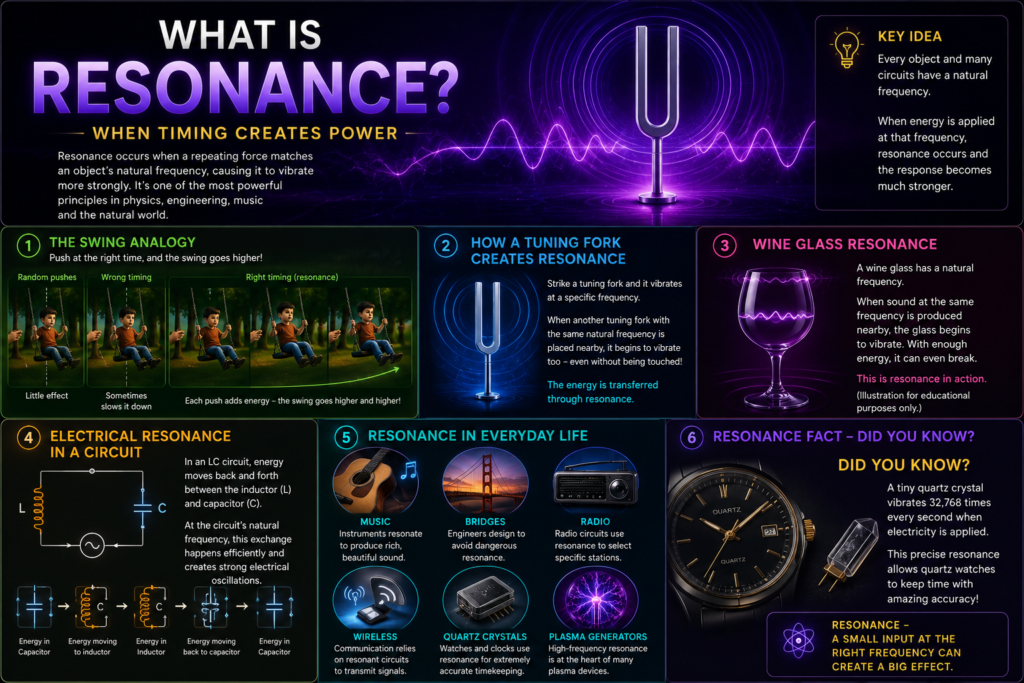
One of the most fascinating aspects of high-frequency plasma technology is resonance.
Resonance occurs when electrical components naturally oscillate together at particular frequencies.
Rather than simply increasing power, a well-designed resonant circuit transfers energy efficiently between inductive and capacitive elements.
This principle has fascinated engineers since the early work of Nikola Tesla.
Understanding resonance helps explain why builders carefully consider component values and circuit layout when experimenting with these systems.
Why Build Instead of Buy?
People decide to build their own plasma generator for many different reasons.
Some enjoy learning new engineering skills.
Others appreciate the satisfaction that comes from completing a challenging project.
Many hobbyists also enjoy experimenting with different enclosure designs, cooling arrangements and output accessories.
Building your own machine can be an incredibly rewarding educational experience if you already have experience working with electronics.
However, it is worth remembering that sourcing specialist components, assembling the system, and troubleshooting any issues can take considerable time.
Is Building a TZLA Machine Right for You?
Before beginning any complex electronics project, it’s worth asking yourself a few questions.
Do you already have experience with electrical circuits?
Are you comfortable interpreting technical information?
Do you enjoy spending hours testing and refining projects?
Have access to suitable tools?
Do you have the time required to source parts from multiple suppliers?
If you answered “yes” to most of these questions, you may enjoy the challenge of researching and building a TZLA-inspired device.
If not, there are other options available that allow you to enjoy high-frequency plasma technology without taking on a major construction project.
A Simpler Alternative
For many people, the goal isn’t necessarily to build an electronics project.
Instead, they simply want to experience and explore high-frequency plasma technology.
Rather than spending weeks or months sourcing components and assembling a system, many enthusiasts prefer a professionally built unit that is ready to use.
That’s exactly why I hand-build my own High Frequency Plasma devices here in the UK.
Every machine is individually assembled, tested and carefully inspected before it leaves my workshop.
Unlike mass-produced electronics, each unit receives personal attention throughout the build process.
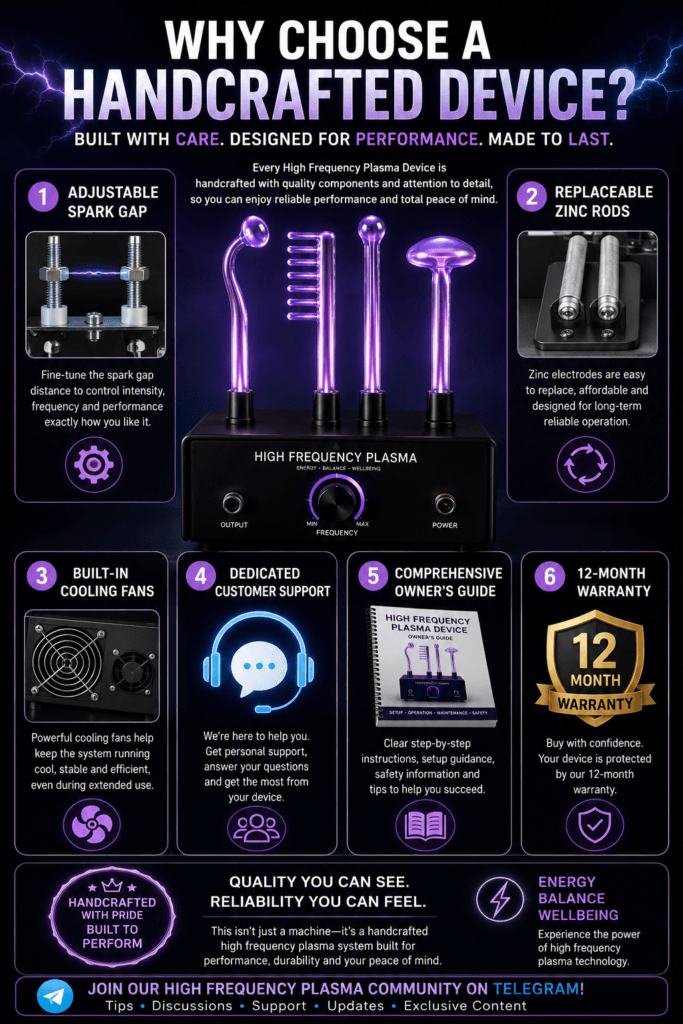
My Handcrafted High Frequency Plasma Device
If you’ve been researching how to construct a TZLA machine, you’ve probably already discovered how much time and effort goes into building one.
That’s why I also offer a complete handcrafted alternative.
Each High Frequency Plasma device includes:
Professionally hand-built in the UK ✔
Adjustable spark gap ✔
Replaceable zinc electrodes ✔
Two handheld plasma bulbs ✔
Built-in cooling fans ✔
Quality high-voltage components ✔
Plug-and-use operation ✔
Comprehensive owner’s guide ✔
Ongoing customer support ✔
Access to our growing High Frequency Plasma community ✔
Every device is individually assembled and tested before shipping.
For many customers, this removes the uncertainty of sourcing dozens of components while still allowing them to explore the fascinating world of high-frequency plasma technology.
Current price:
£3,333
Learn How to Construct a TZLA Machine Here

Join the High Frequency Plasma Telegram Community
One of the best ways to learn more about plasma technology is by joining a community of like-minded enthusiasts.
Our High Frequency Plasma Telegram Community has been created for people who enjoy learning about:
- Nikola Tesla
- Spark-gap technology
- Plasma generators
- High-frequency electronics
- Historical electrical research
- Experimental engineering
- New developments in plasma technology
Whether you’re considering building your own project, researching historical designs, or simply curious about how these fascinating devices work, you’ll find friendly discussions and educational resources from people who share the same interests.
New members are always welcome.
Continue Learning How to Construct a TZLA Machine
If you’re interested in the science behind these devices, be sure to explore the free articles in our High Frequency Plasma Learning Centre.
Topics include:
- What Is High Frequency Plasma?
- What Is Plasma?
- How Does a Plasma Generator Work?
- Understanding Spark Gaps
- Why Zinc Electrodes Are Used
- Plasma Bulbs Explained
- Tesla’s Influence on High Frequency Technology
These articles are written in simple language and are ideal for both beginners and experienced enthusiasts.
Final Thoughts
Searching for how to construct a TZLA machine often begins with curiosity.
For some people, that curiosity develops into an enjoyable electronics hobby.
For others, it becomes an appreciation of the remarkable work carried out by pioneers such as Nikola Tesla, Jacques-Arsène d’Arsonval, Paul Oudin and Georges Lakhovsky.
Whatever brought you here, one thing is certain—high-frequency plasma technology remains one of the most fascinating areas of experimental electrical engineering.
Whether you decide to research historical designs, join our community of enthusiasts, or invest in a professionally handcrafted plasma device, there has never been a better time to explore this unique technology.
We hope this guide has helped you better understand the principles behind these remarkable machines and inspired you to continue learning.
Frequently Asked Questions
Can I build a TZLA machine myself?
Many electronics enthusiasts research and experiment with TZLA-inspired designs. Building a high-frequency plasma generator requires a solid understanding of electronics, careful planning, and appropriate safety precautions when working with high-voltage equipment.
Is a homemade plasma generator cheaper?
The cost of individual components can vary significantly. While sourcing parts yourself may reduce upfront equipment costs, it also requires considerable time, specialist knowledge and testing.
What makes a spark gap important?
A spark gap is a classic component used in many historical high-frequency electrical systems. It produces rapid electrical discharges that can initiate oscillations within resonant circuits.
Why are zinc electrodes commonly discussed?
Many experimental designs use zinc or galvanized components as spark-gap electrodes. Different builders choose different materials based on their own preferences and experimental goals. The reference document discusses zinc electrodes as one approach within its design.
Is buying a professionally built plasma device a better option?
For many people, yes. A professionally assembled unit removes the need to source components, troubleshoot assembly issues and spend time building, allowing you to focus on learning about the technology itself.